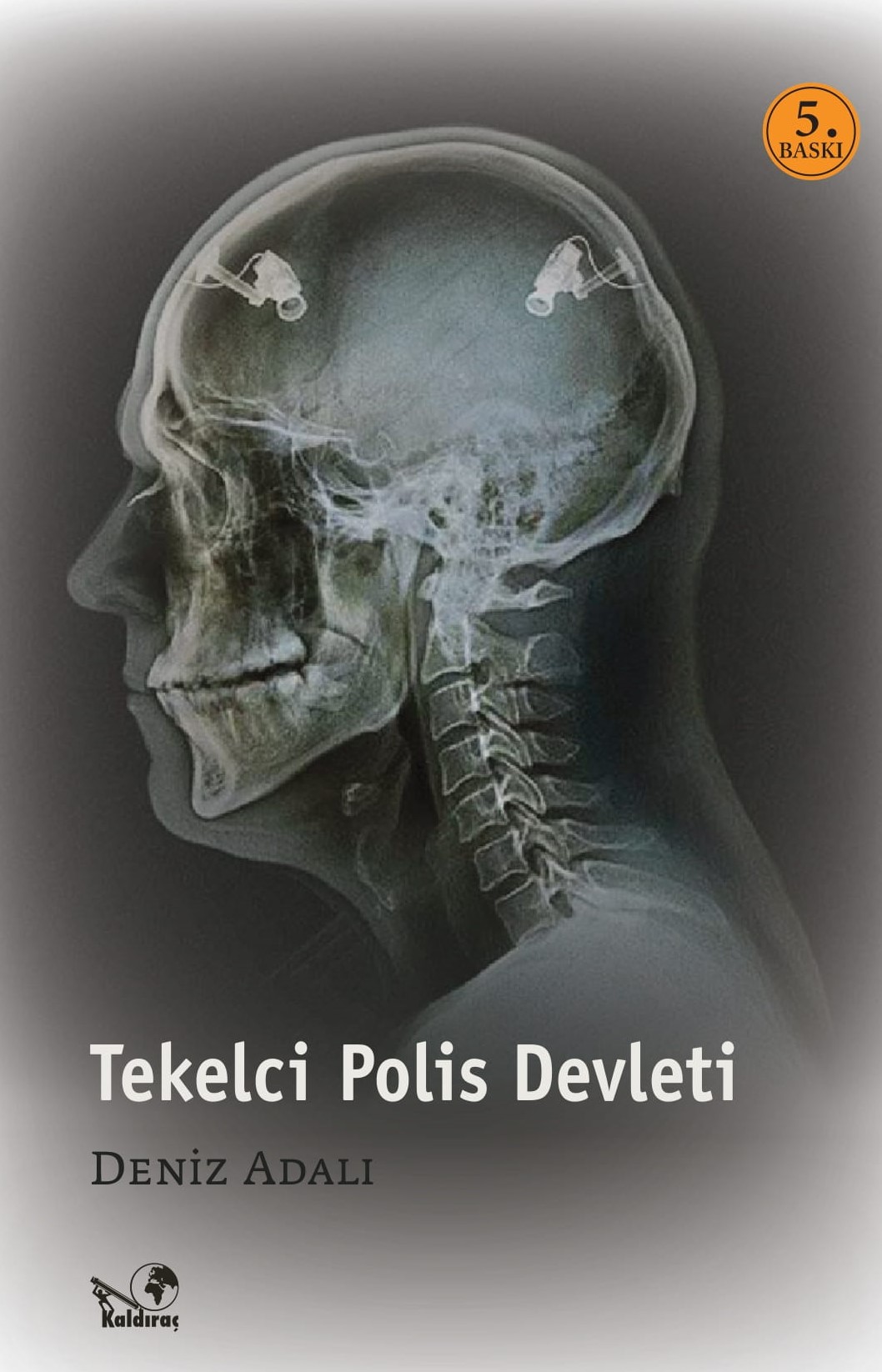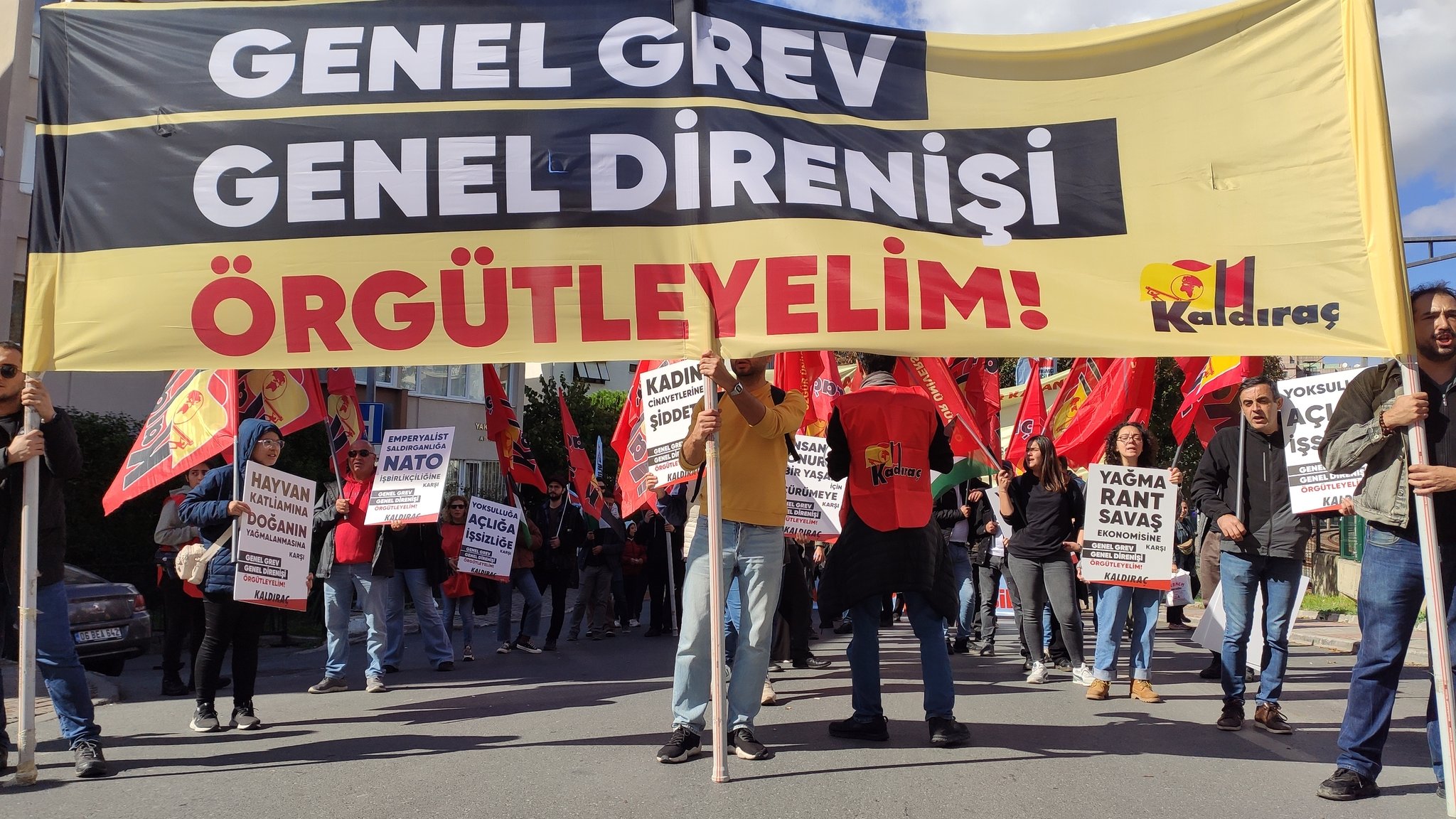


This is the statement issued by Kaldıraç Movement on the 28th anniversary of martyrdom of their comrades; Bekir Kilerci and Ali Serkan Eroğlu on December 3, 2025
Today, the only planet said to contain life is Earth. But is there truly life here? In a biological sense, yes, there is. Yet, you should ask people individually; are they able to live? If they could answer, you should have asked the trees, the animals and the waters if they were able to live. The situation changes depending on where you look from. The right questions need to be asked. It is not the Earth that prevents us from living. It is the systems built upon the Earth.
It is not possible to look at this world neutrally. Let us proceed with familiar sentences, let us recall. The history of class societies is the history of class struggles. For this to be true, you do not need to see the two classes openly and clearly fighting on the battlefield. But this does not change the fact that these two classes are indeed in struggle. To understand this, one must possess the knowledge of the science of nature and society.
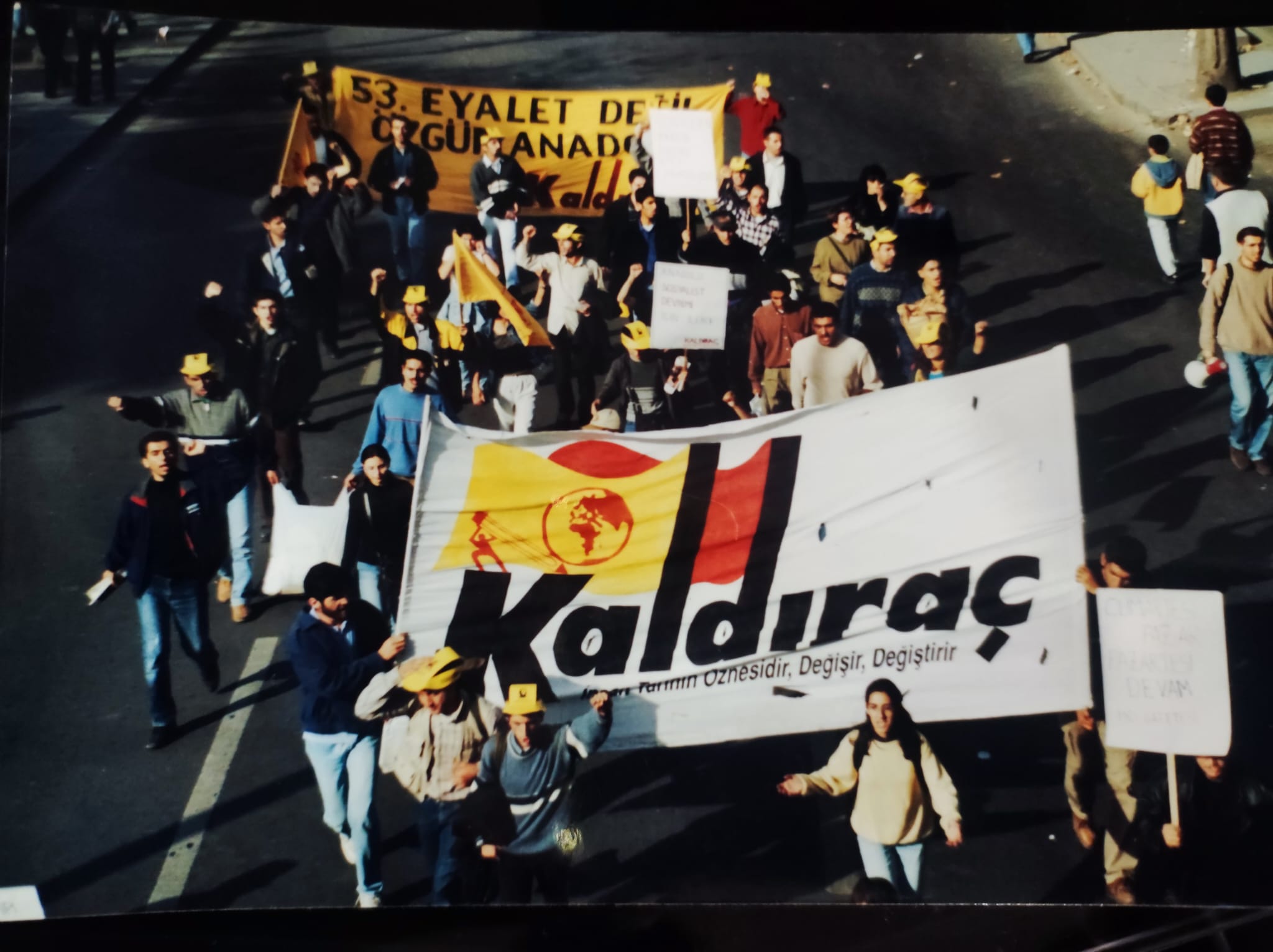
Today, we have Marxism-Leninism for this. To make sense of the growing economic crises, the wars, and the resistances that develop in response to them and to be able to plan our steps, this science is among our essential needs. For this reason, bending the science also leads to bending the truth.
For example, if you do not want to swim, you simply don’t go into the sea; it’s as simple as that. There’s no point in claiming that the buoyant force of the water doesn’t exist and that if we enter, we will sink to the bottom and drown. It is possible to struggle and drown right on the shore and it is also possible to make a ship weighing tons float like a swan. Both drowning and making a massive ship float are matters of your own choice, yet the buoyant force of water always remains there; that element which does not depend on you is science.
And the reason we need all of these is our desire to put an end to the class-based societies built upon the Earth, which itself is entirely without sin. Today, this is possible. Look from the future, perhaps from 5 or 10 years ahead. From that vantage point, we, the revolutionaries of today, will be seen as the revolutionaries living within the Third World War. It is possible to make them say, “They halted these wars through revolutions” and equally possible to make them say, “They merely watched.”

There are those who look at us from even further ahead. Bekir and Serkan are among those who have arrived there before us. Those who accompany us at every step, come in the Decembers of every year with the question; “What must we understand and what must we convey this time in order to reach a classless society?”
If you choose to be content with what is visible; Bekir Kilerci was murdered under torture on 13 December 1997 at the Ankara Counterterrorism Branch. Ali Serkan Eroğlu was murdered by hanging in the restroom of Ege University, where he was studying, on December 24, 1997. The truth, however, is the path they walked; it continues and it is walked together with them. Today we take our steps on that same path, together with them, with what we have learned from their struggles, their poems, their stories; together with Mahir, with İbo, with Deniz, with Fidel and Che, with the children throwing stones in Palestine, with the workers of the Soviet Union, with the Communards of Paris, with the responsibility of walking the same roads they walked. Let us take our steps accordingly.
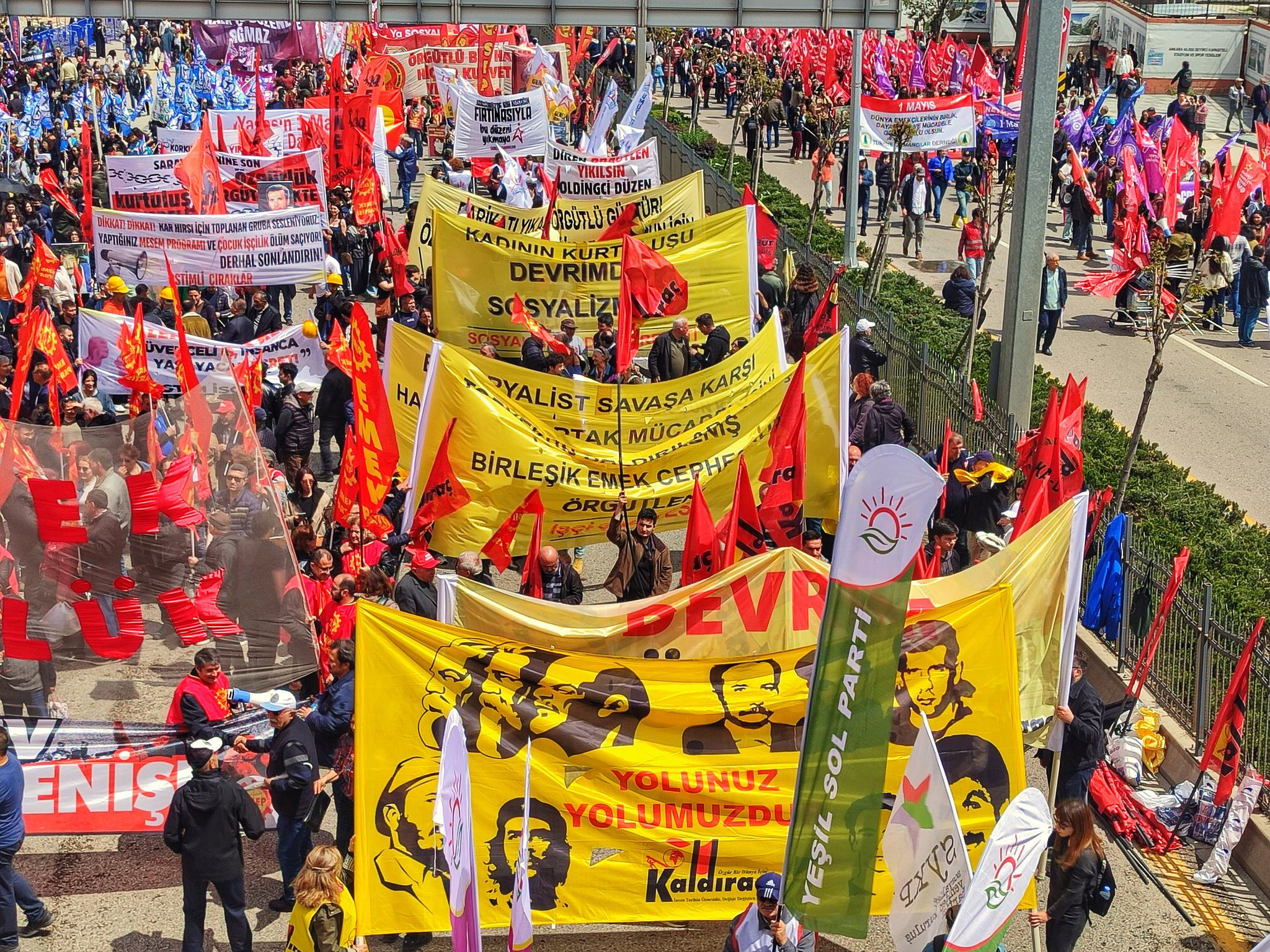
We, who choose to look toward building the future through the eyes of these minds, are not a group of mere believers; we are those who understand the laws of nature and society and dare to make a ship weighing tons float. We are the ones who do what falls to us; if it is a single drop, then a single drop; if it grows into a river, all the better. In the face of our mistakes, we are the ones who seek not to bend the truth but to take a step for tomorrow. We are those who walk in the footsteps of the creators of this mind, demonstrating the will to become the creators of tomorrow.
Today is dark. Do you think it will always go on like this? We are not speaking of the cliché “What goes around comes around.” Nothing comes around unless there is someone to make it come around. Without the will to change, even darker times will come. Wars will grow further, crisis, poverty and decay will deepen; these are not prophecies, but class struggle. Only the fight that the working class will carry forward together with women, students and the people will change the plans imperialism has for the world. It is the world to be built by the oppressed, the exploited, the disregarded that will change this history.
The time has come; take a step. Yesterday the time had come as well but if you still have not taken a step, then take one now. It is not enough; if you have taken steps already, take a few more. We are here and you are here. Revolution is in our hands; it is in what we have done and in what we have not done and what we have learned from. Revolution is in science; history is calling us to power.
Bekir Kilerci’s words are still clearing the path
Bekir Kilerci and Ali Serkan Eroğlu left tens of poems and stories to show the way to us, to their comrades. Decades after their murder we translated a piece of Bekir’s poems and stories to share with their comrades abroad from all nations:
PLANT CULTIVATION
1.
Mr. L said that at a certain stage of their growth, plants need to be pruned. You might, he said, pity for the branch that is cut off, looking at the trimmed away and thrown aside pieces. You might even think it is unjust for those discarded parts. Yet, a branch is a part of the plant itself. And when the plant begins to suffer because it has lost its vitality from not being pruned and when the branch that should have already been pruned realizes that not being discarded is a betrayal of the plant – which it will, sooner or later, realize- right at that moment, it will suffer additional pain.
2.
Mr. L once said this. Pruning a plant requires great skill. Above all, you must know the plant very well. As a child, I once did something quite foolish. I had watched a gardener pruning roses, mesmerized by the strength and sharpness of the shears. At the first opportunity, I took the shears into my own hands and pruned a plant. It happened to be a young poplar sapling. After pruning off all its shoots, I got carried away and ended up chopping off the top of the sapling as well.
When the roses later bloomed so beautifully but the poplar withered, I realized that merely possessing the strength of the scissors, instead of mastery, was not enough.
3.
When Mr. L was young, he had seen a yellowing tree in his grandfather’s garden. The tree had been planted in a large canister. Mr. L recalled that this tree had been quite healthy the previous year, even bearing a fruit or two. Seeing it now, yellowed and sickly, he came to the following conclusion: the plant is no longer growing because it had fallen ill; perhaps it was time to prune it.
However, Mr. L’s grandfather took the tree out of the canister and planted it in the middle of the garden. The tree, which had been yellowing because its roots were constricted by the canister, quickly adapted to the new situation. Its leaves turned green and it bore much fruit that year.
Since that day, whenever Mr. L eats fruit, he often thinks to himself:
“Perhaps what I perceive as a flaw is in fact the strongest engine of growth.”
Comrade
Don’t say it won’t, as it might;
happen that we meet
in front of a wall
Our hands tied behind
our eyes, we did not let them be tied
bullets pierce our bodies
Don’t say it won’t, as it might;
happen that we meet
in the crowd at a station
Looking past each other,
without talking, touching
we strike at each other’s shoulders
“Take care of yourself comrade”
and a star falls on our hearts
so small -warm- red,
we walk.
II.
Don’t say it won’t, as it might;
surely it will
happen that we meet
on the large street
of a large city
You, at the front of the march
will sing the International
shouting,
I
will climb on the city’s highest tower
with a red flag in my mouth
going mad.
III.
If our bodies are lucky enough to grow old
below the shadows of red flags
I would like to walk barefoot on the soil with you
on an August night
Without talking
we would walk for a while, I suppose
then looking at the sky,
with eyes fixed on the stars
one of us would issue the command
“That is our new objective”
We would remember at the same time
“Either we will take life to dead stars,
Or death will descend upon our world.”
Bekir Kilerci